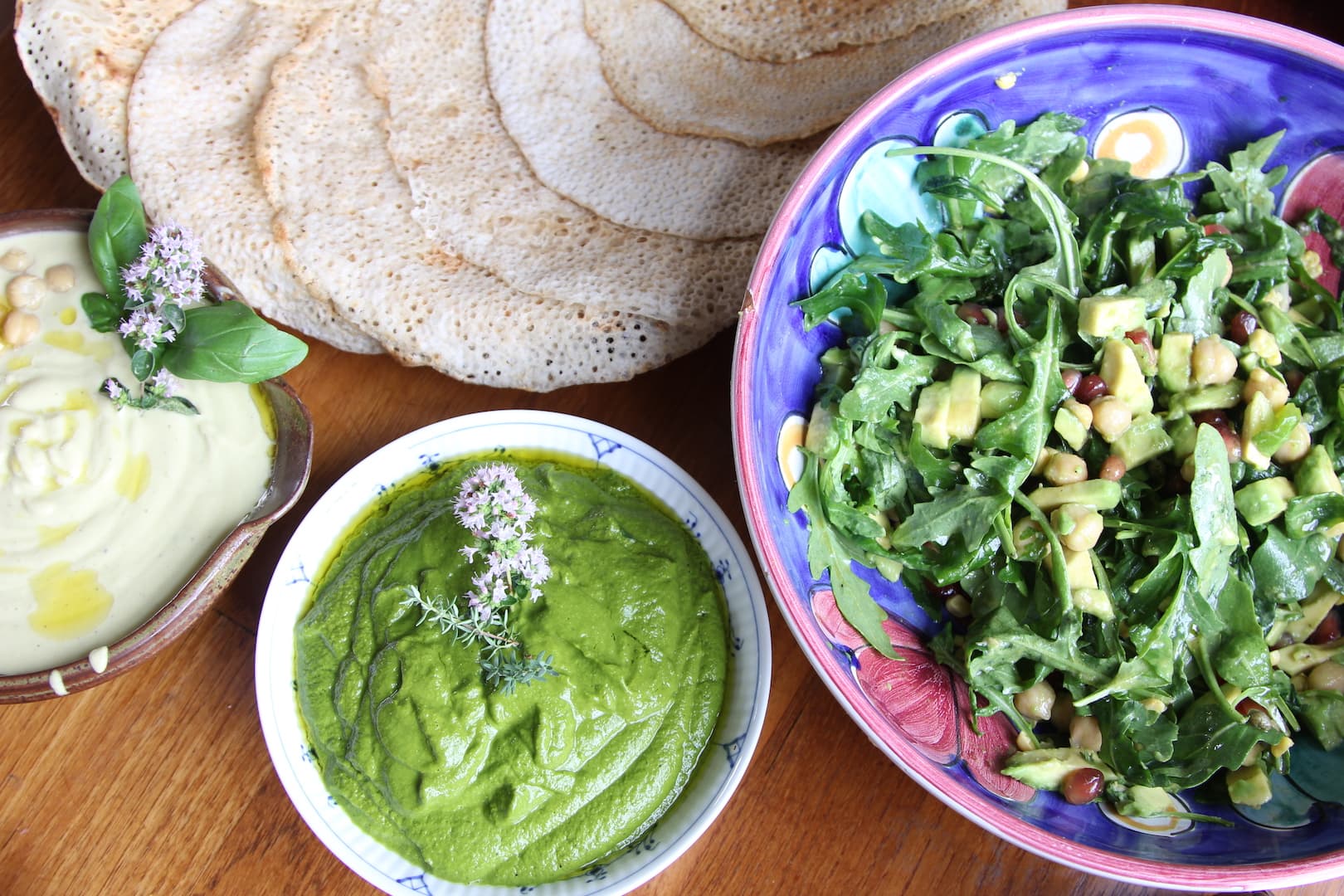
Hummus
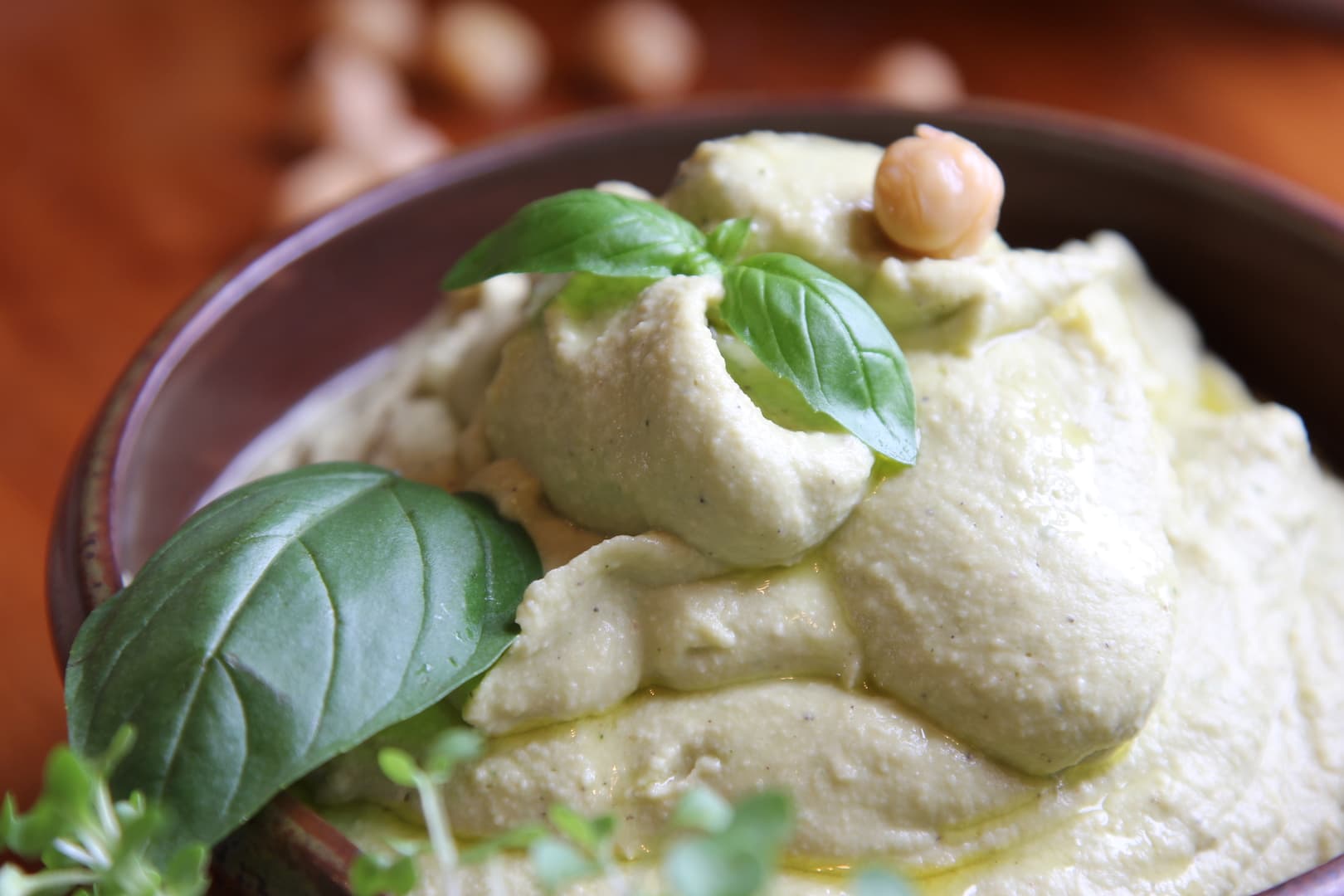
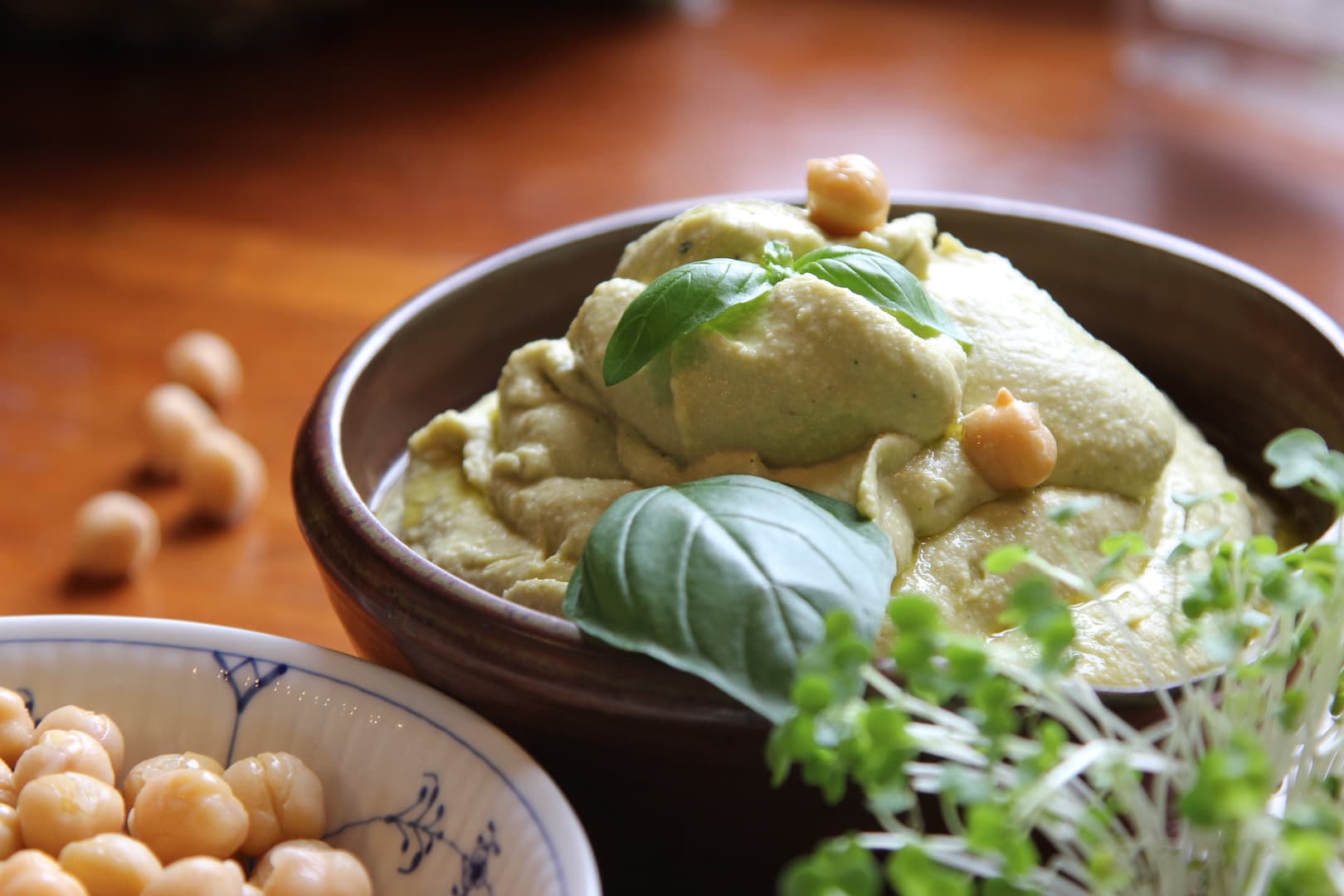
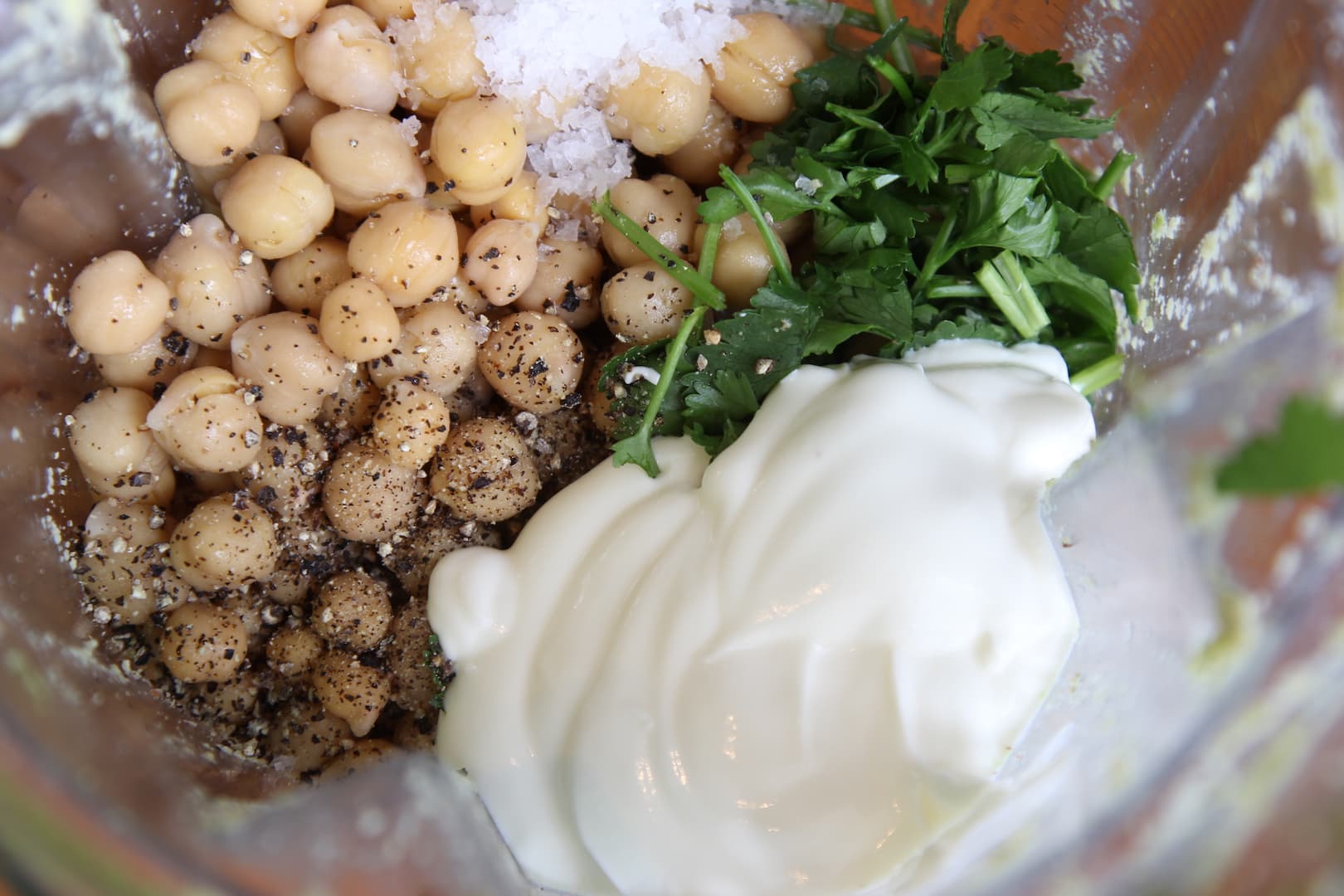
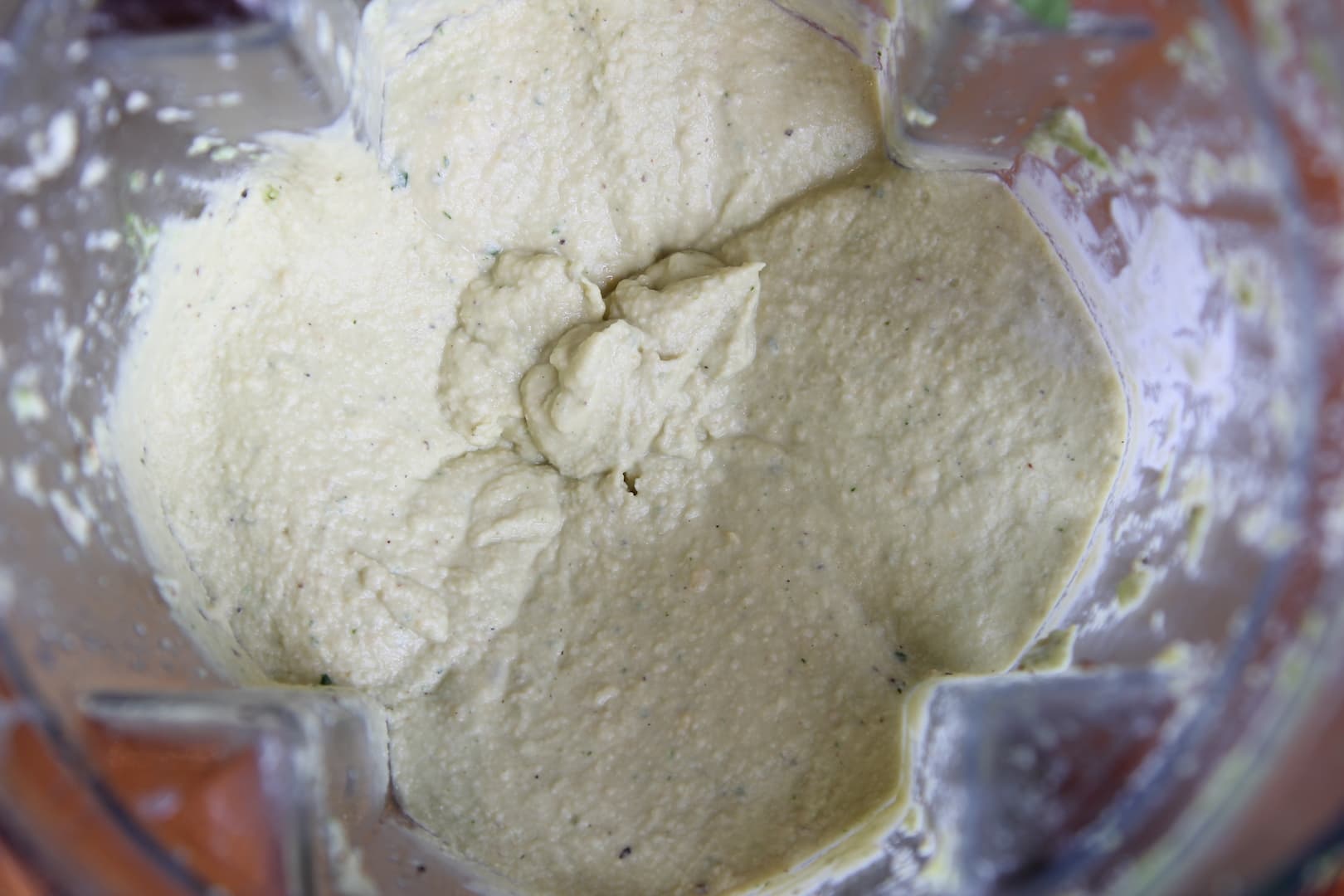
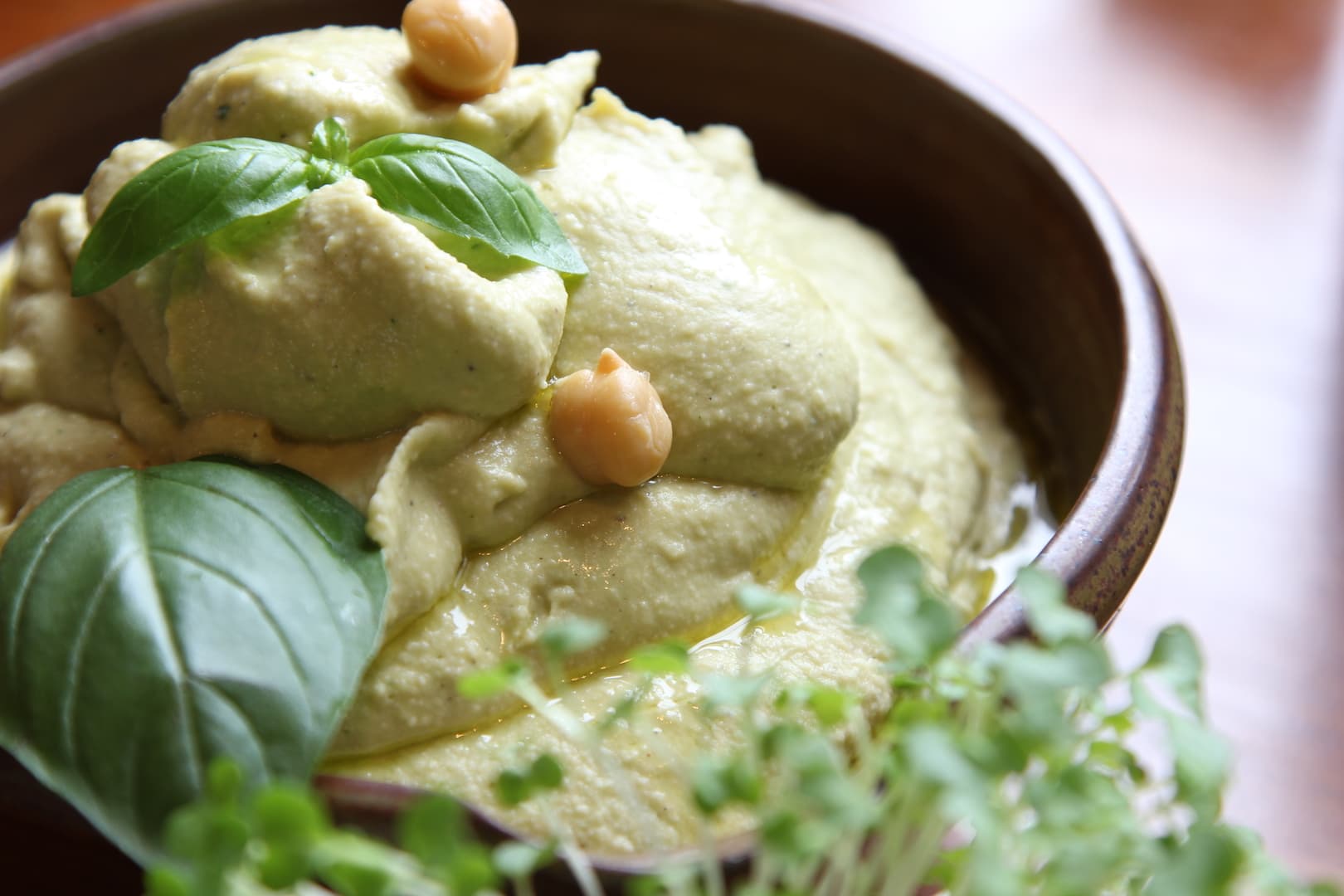
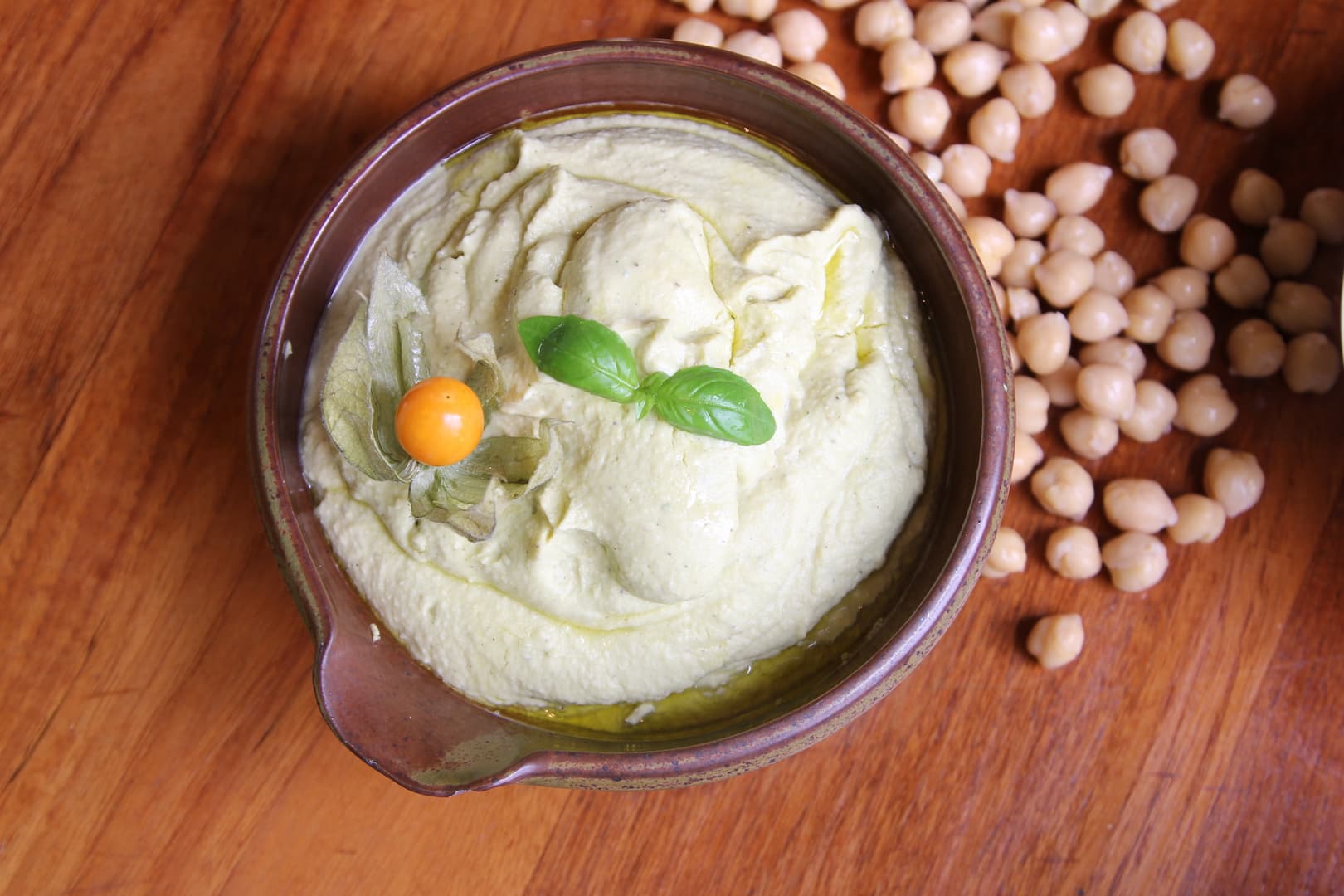
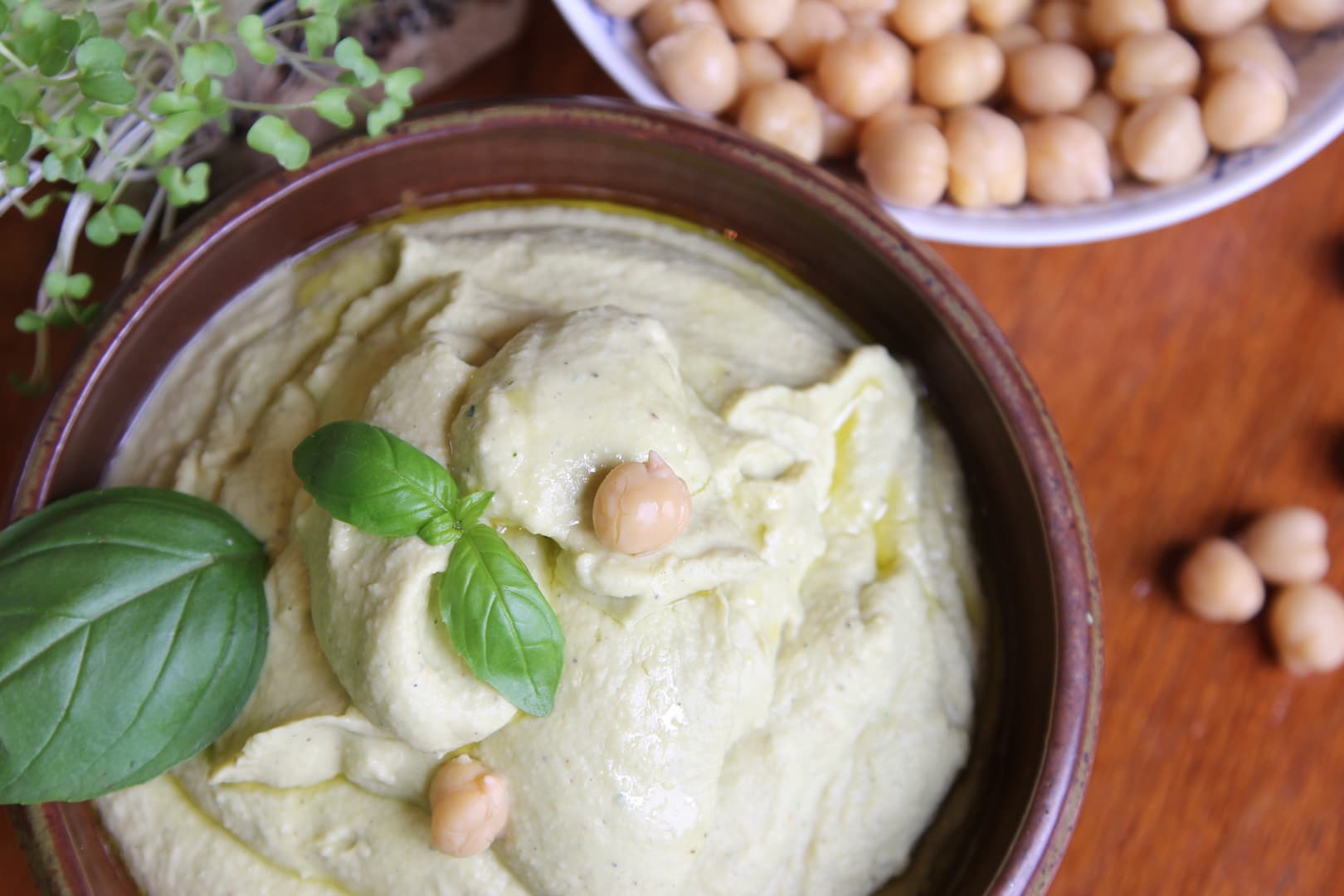
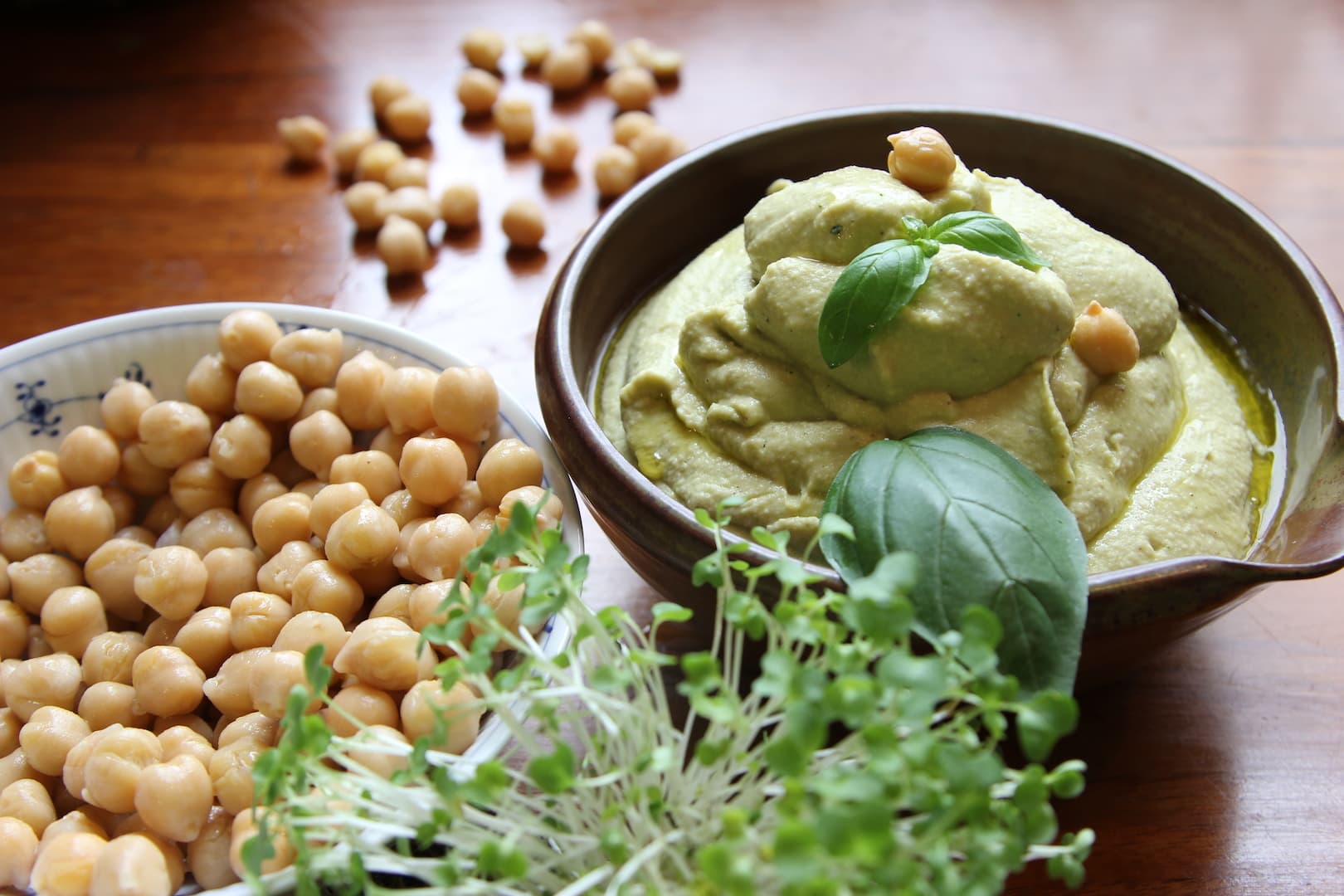
Hummus is an Arabic word for chickpeas. It is made by cooking chickpeas (commonly known as garbanzo beans) until soft and spicing them up with paprika, olive oil, and lemon to create a protein-rich dip typically enjoyed with flatbread. Technically, soft creamy chickpeas are called hummus bi tahini in Arabic, meaning chickpeas with tahini.
In the Arab world, hummus is more than an occasional dip or appetizer. It is a staple food often served with bread, olives, and olive oil at cafes or tea shops, perfected over centuries.
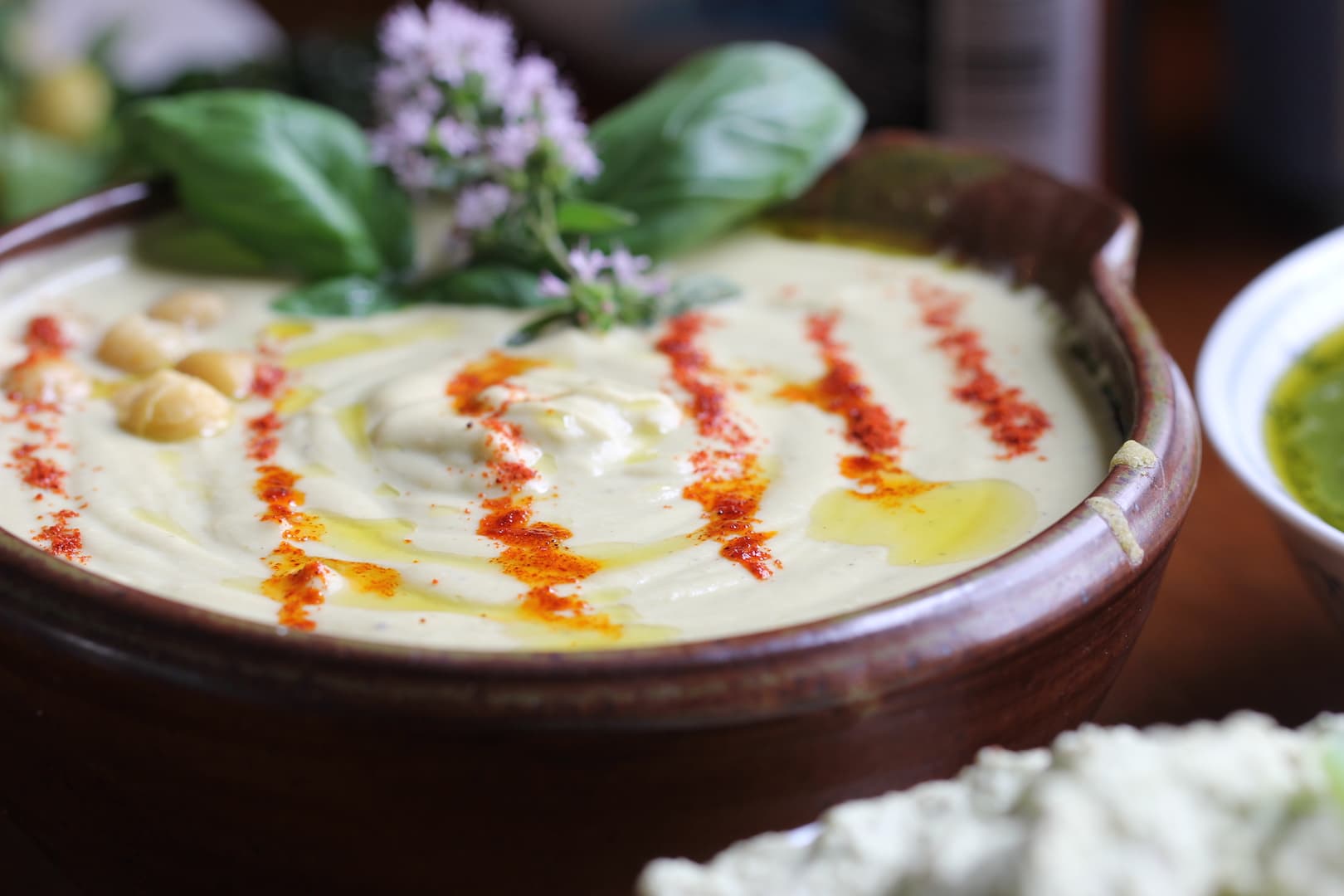
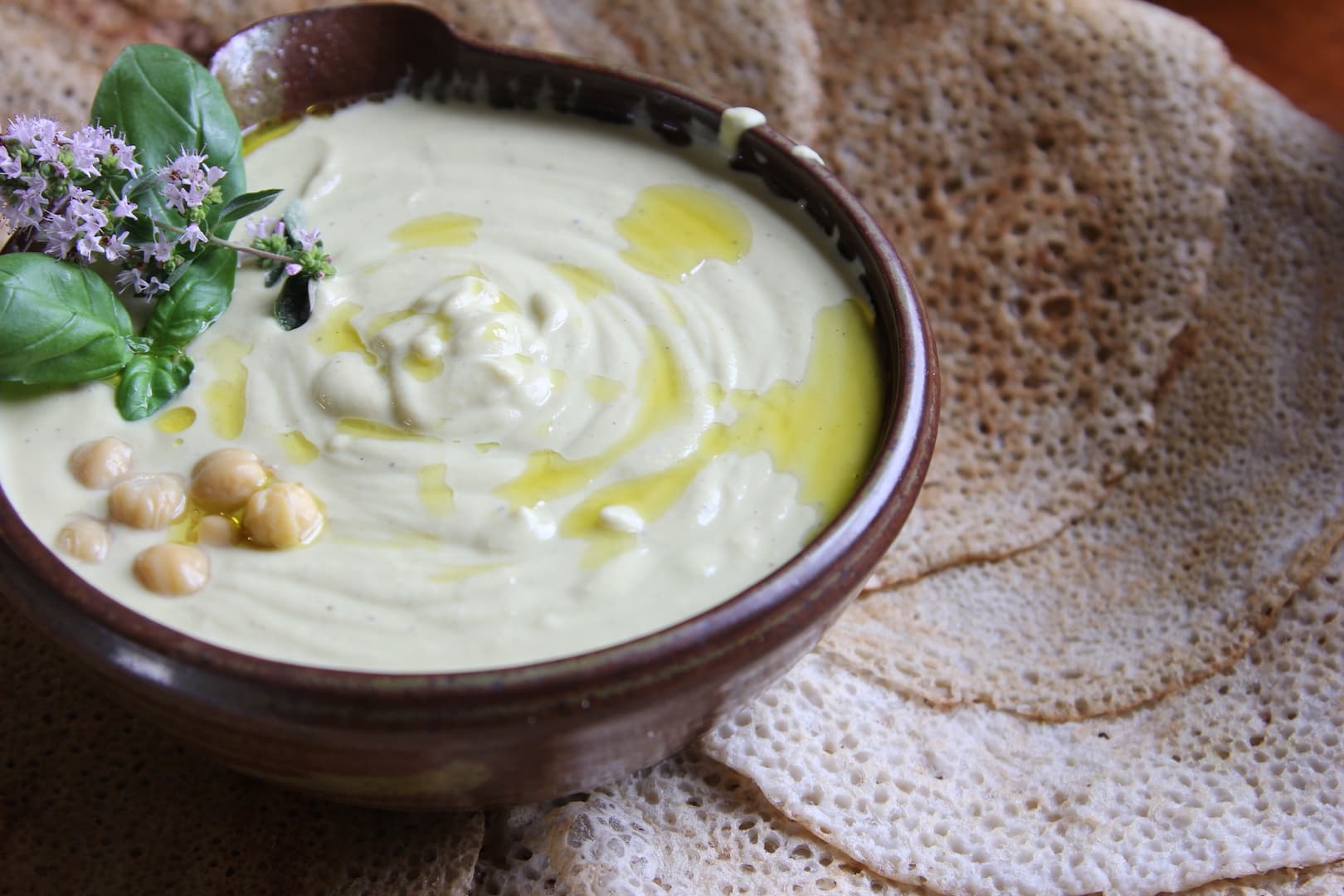
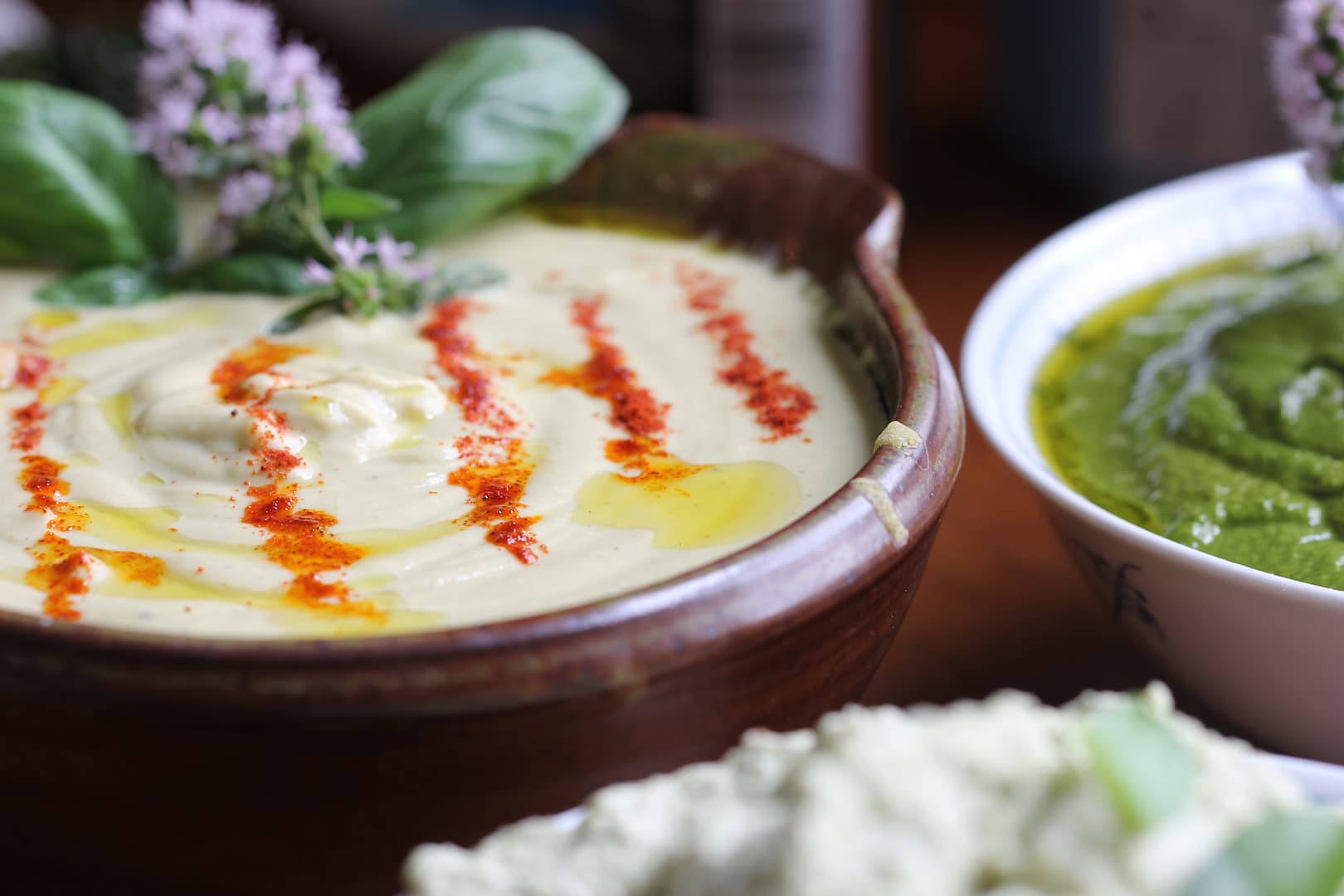
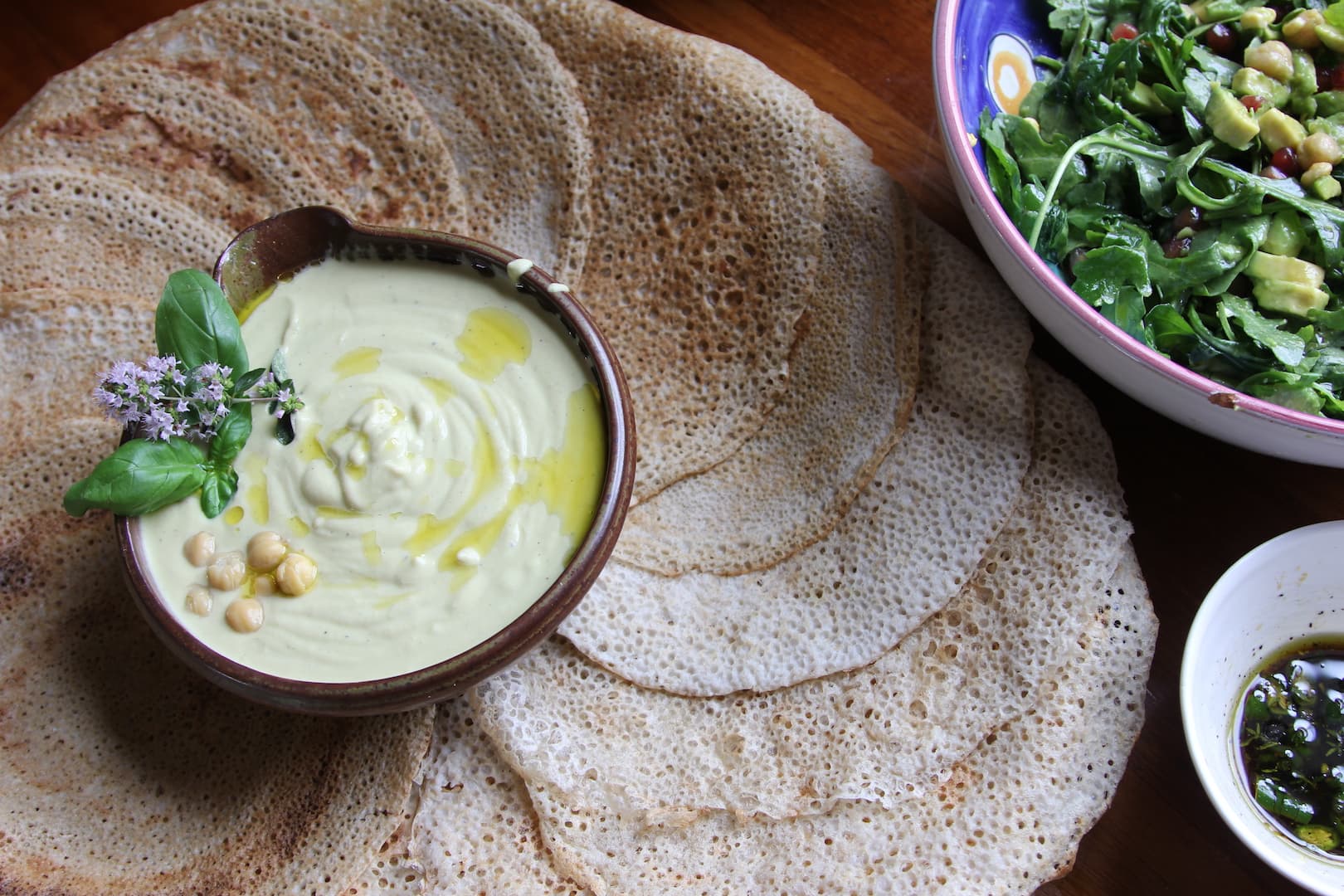
Today, most Arabs buy it in shops, and it is frequently served alongside flatbread, fresh salads, pickled vegetables, and falafel. Traditionally, hummus is a lemony, creamy paste with a hint of spices like cumin powder and paprika. It is served as a smooth, slightly thin spread in a round plate or shallow bowl, drizzled with olive oil.
In the Middle East, it is customary to eat communally from a large plate or bowl. The polite way to eat is to pick up the hummus from the side nearest you. Children are taught not to drag their bread across the plate; instead, they pinch a small piece of bread with hummus and enjoy it, ensuring hygiene when dining together.
This hummus recipe not only offers a creamy, tangy flavor but also provides notable nutritional benefits. Chickpeas are rich in high-quality plant proteins, essential amino acids, vitamins (such as A, B6, B12, C, D, K, thiamine, folate, pantothenic acid, riboflavin, and niacin), and minerals (including iron, calcium, potassium, zinc, copper, selenium, magnesium, and phosphorus). They help regulate blood pressure and blood sugar levels while supporting immunity, digestive health, and heart health.

Comments
Sign in to leave a comment